
Rayctopus
Mantarayus tentaculatus
Stats

Behavior
The Rayctopus is an incredibly intelligent and surprisingly agile deep-sea predator. It uses its broad, wing-like pectoral fins, inherited from its manta lineage, to glide silently through the abyssal depths, often blending seamlessly with the rocky seafloor. Its eight strong, sucker-lined tentacles, characteristic of its octopoid ancestry, emerge from its ventral surface, allowing it to expertly snatch unsuspecting prey, probe crevices, and even manipulate objects in its environment with remarkable precision. Unlike true octopuses, they often hunt in small, loose aggregations, signaling prey location through subtle chromatophore displays across their dorsal surface.
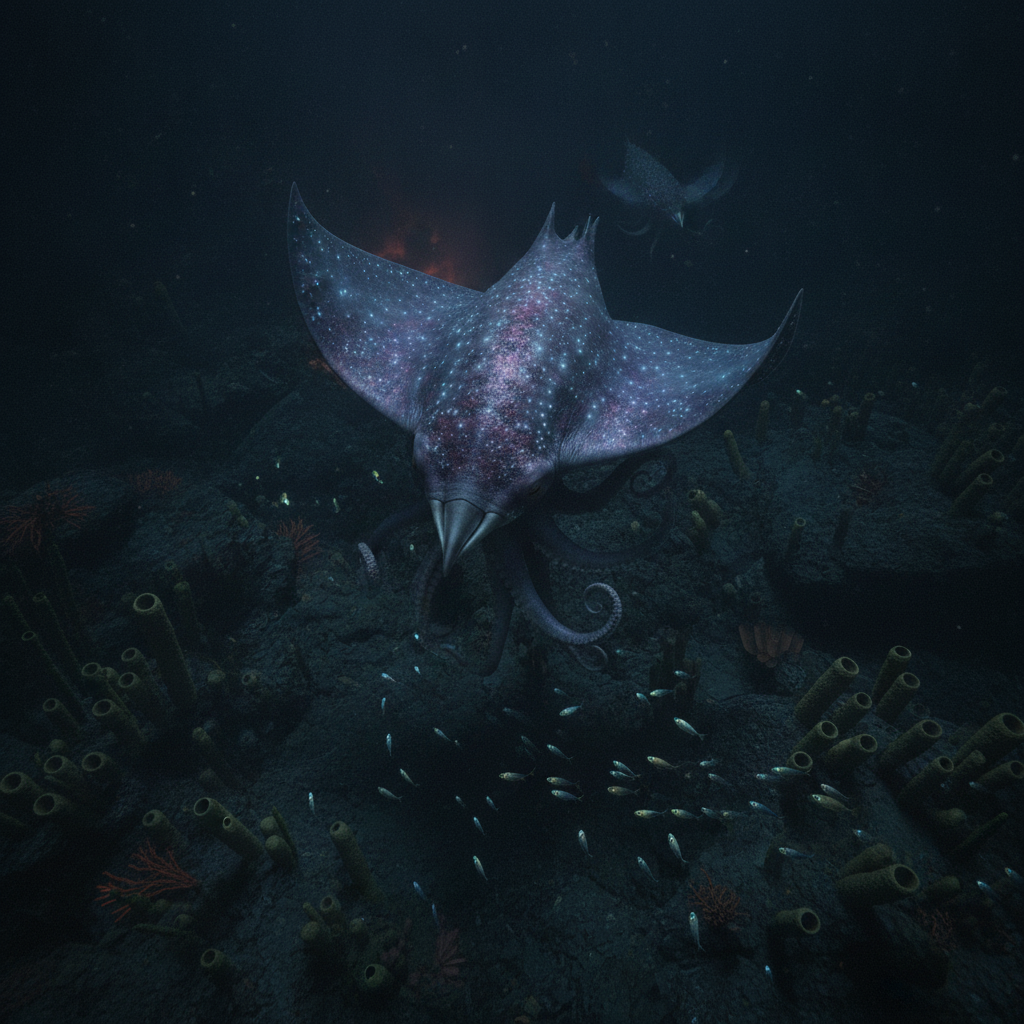
They prefer the extreme pressures and cold temperatures of the deep ocean, particularly around active volcanic reefs where hydrothermal vents provide warmth and unique ecosystems. Rayctopi are primarily solitary hunters but will gather in small groups during mating season or when a particularly rich food source is discovered. They build intricate temporary dens in rock formations or abandoned structures using their powerful tentacles, often camouflaging the entrances with debris. Their ability to rapidly change skin texture and color makes them masters of disguise against the varied backdrops of the deep.
Fun Facts
- 🔬 Its skin can display complex bioluminescent patterns, used for communication, attracting mates, and startling prey in the perpetual darkness of its habitat.

- 🔬 The Rayctopus is known to use discarded deep-sea debris, like broken human equipment, as tools or temporary shelter, showcasing advanced problem-solving skills.
- 🔬 Despite its size, it possesses an incredibly flexible cartilaginous skeleton, allowing it to squeeze through surprisingly narrow openings when escaping predators or exploring tight spaces.